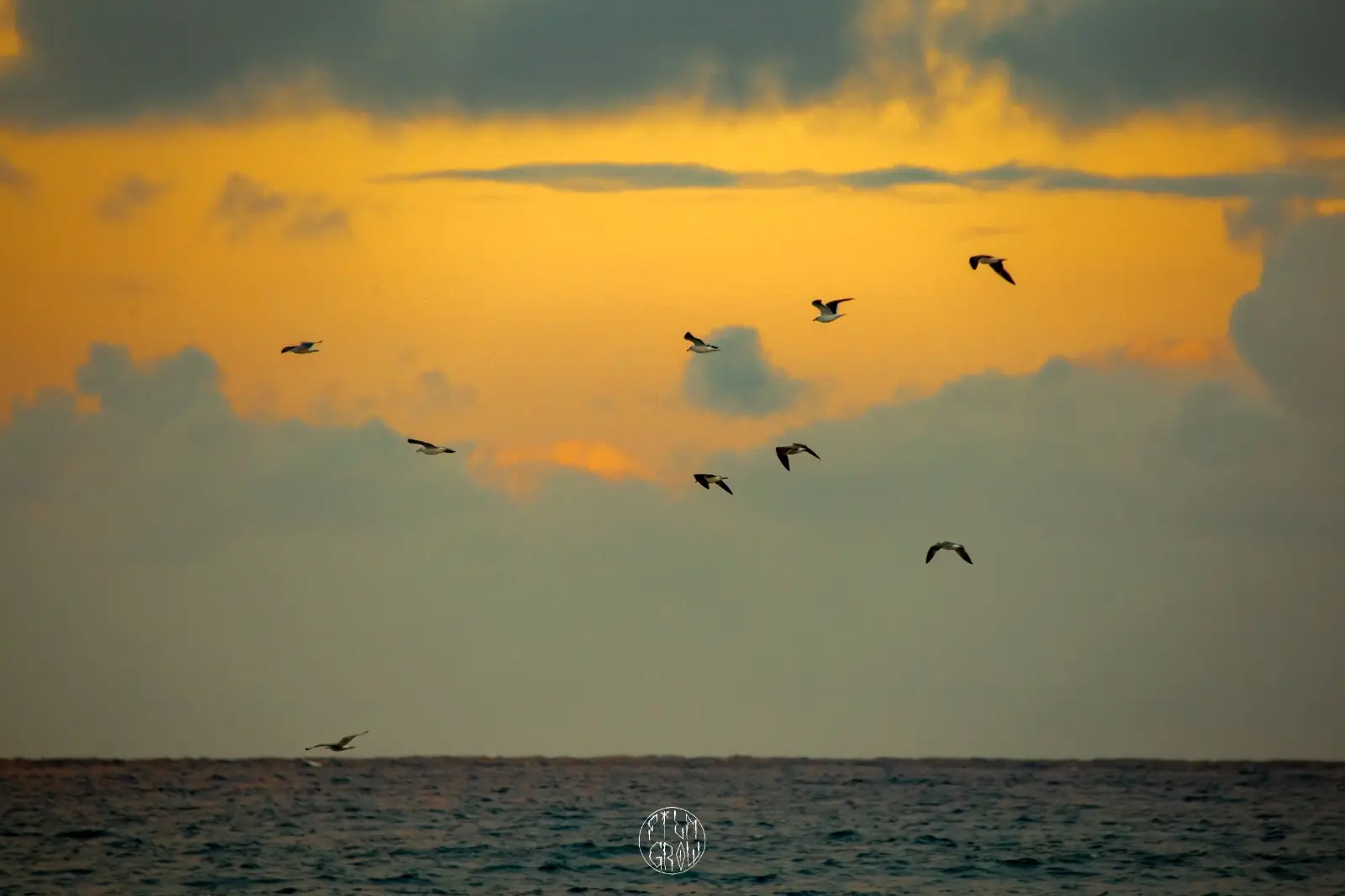
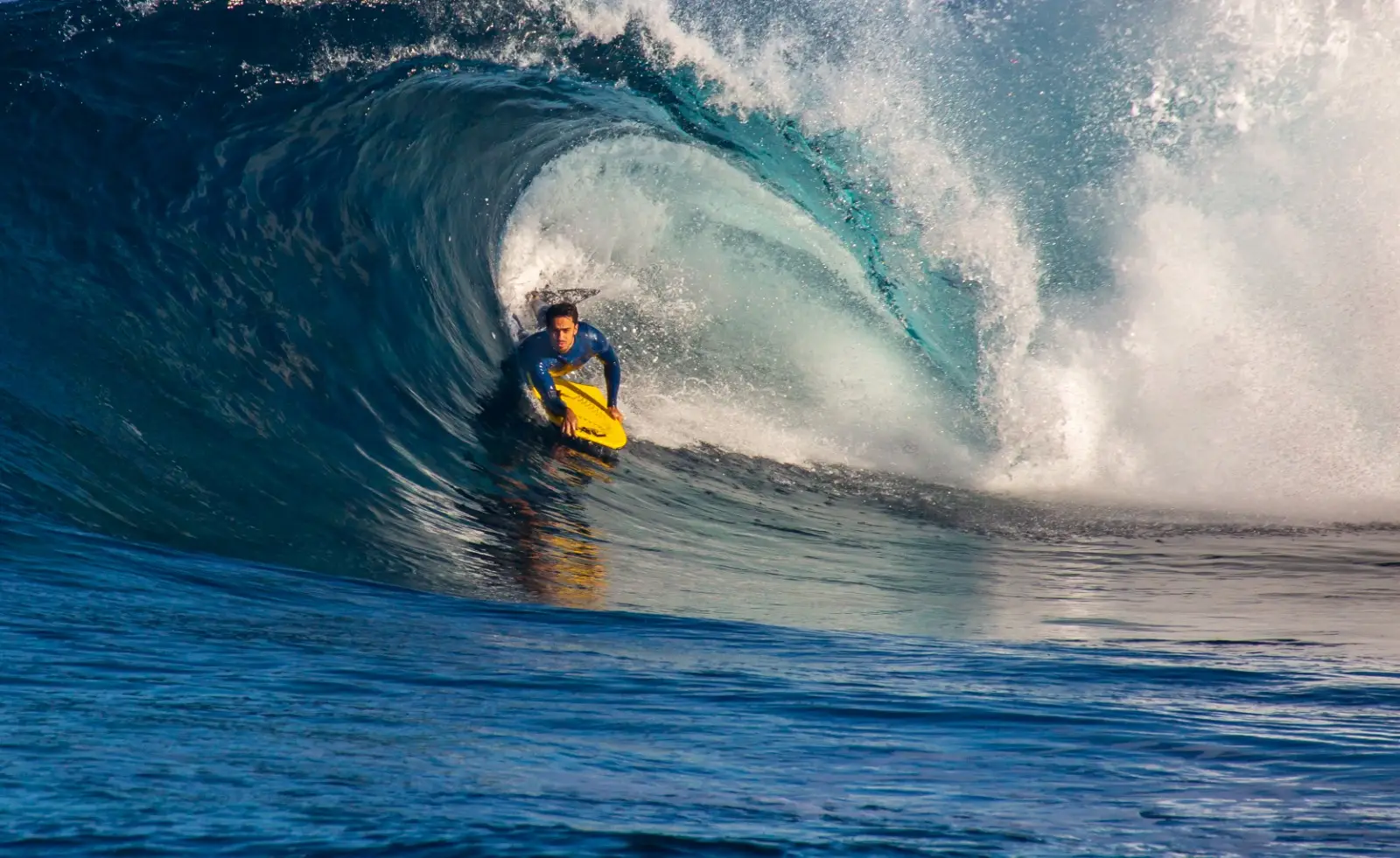
Cabo de Trafalgar is the low sandy headland and lighthouse beside Los Caños de Meca, off which Nelson fought the famous 1805 battle. On a solid west or north-west swell, waves break over a mix of sand and rock along the cape, producing some of the most powerful and best-shaped surf on the Costa de la Luz. It only wakes up on bigger winter swells, works best with the easterly Levante blowing offshore, and has strong currents running around the point, rocks and a crowd when it's on. Best left to advanced surfers.
🌡️ ~18.2°C now · a 3/2mm full suit, or a shorty if you run warm
This week at Cabo de Trafalgar: 2–6 ft, clean mornings Fri, Sat, Mon. Best day: Fri (advanced).
About normal for November (avg 3.6 ft).
Wed
5 ft
6s W
AM wind: Cross-on 19 km/h
AdvancedThu
5–6 ft
7s W
AM wind: Onshore 20 km/h
AdvancedFri
4–5 ft
9s W
AM wind: Cross-off 8 km/h
AdvancedSat
3–4 ft
8s W
AM wind: Offshore 9 km/h
AdvancedSun
3–4 ft
6s W
AM wind: Cross-on 14 km/h
AdvancedMon
3 ft
8s W
AM wind: Glassy 7 km/h
AdvancedTue
2–3 ft
7s W
AM wind: Onshore 10 km/h
Updated Nov 19, 10:47 PM UTC · modelled swell and wind, not a surf report · Forecast data: Open-Meteo.com · Check live forecast ↗
Beginner: not suitable for this level
Intermediate: not suitable for this level
Advanced: Jan, Feb, Mar, Apr, Oct, Nov, Dec
Follow @surfscanners
New spots, best-month tips and the local crews at Cabo de Trafalgar. Tag us in your clips and we'll share them.
Beginner: not suitable for this level
Intermediate: not suitable for this level
Advanced: Jan, Feb, Mar, Apr, Oct, Nov, Dec
All-time average wind & swell
Dashed line marks Cabo de Trafalgar's known offshore direction. Bright arrow is the all-time average swell direction, colored arrow is the all-time average wind direction at 14 km/h — hover or tap either arrow for exact values.
Monthly avg wave height (ft)
Monthly avg wind speed (km/h)
| Jan | Feb | Mar | Apr | May | Jun | Jul | Aug | Sep | Oct | Nov | Dec |
| 16° | 16° | 16° | 17° | 18° | 21° | 21° | 22° | 21° | 20° | 18° | 16° |
Averages from 3 years of daily wave, wind and water temperature data — what a typical year looks like, not a forecast.
Waves average 4.5 ft (1.4 m), with cross-offshore winds around 14 km/h from the N. Water is ~16°C: a 3/2mm full suit. A best month for advanced surfers.
Waves average 4.6 ft (1.4 m), with offshore winds around 16 km/h from the NE. Water is ~16°C: a 3/2mm full suit. A best month for advanced surfers.
Waves average 5.4 ft (1.7 m), with onshore winds around 17 km/h from the W. Water is ~16°C: a 3/2mm full suit. A best month for advanced surfers.
Waves average 3.7 ft (1.1 m), with cross-offshore winds around 16 km/h from the N. Water is ~17°C: a 3/2mm full suit. A best month for advanced surfers.
Waves average 2.7 ft (0.8 m), with onshore winds around 13 km/h from the W. Water is ~18°C: a 3/2mm full suit, or a shorty if you run warm. Not one of the standout months for any level.
Waves average 2.6 ft (0.8 m), with cross-onshore winds around 14 km/h from the S. Water is ~21°C: a 2mm spring suit / shorty. Not one of the standout months for any level.
Waves average 2.3 ft (0.7 m), with onshore winds around 12 km/h from the SW. Water is ~21°C: a 2mm spring suit / shorty. Not one of the standout months for any level.
Waves average 2.4 ft (0.7 m), with cross-onshore winds around 13 km/h from the S. Water is ~22°C: a 2mm spring suit / shorty. Not one of the standout months for any level.
Waves average 2.5 ft (0.8 m), with onshore winds around 13 km/h from the W. Water is ~21°C: a 2mm spring suit / shorty. Not one of the standout months for any level.
Waves average 3.7 ft (1.1 m), with offshore winds around 15 km/h from the SE. Water is ~20°C: a 3/2mm full suit, or a shorty if you run warm. A best month for advanced surfers.
Waves average 3.6 ft (1.1 m), with cross-offshore winds around 13 km/h from the N. Water is ~18°C: a 3/2mm full suit, or a shorty if you run warm. A best month for advanced surfers.
Waves average 3.5 ft (1.1 m), with cross-offshore winds around 12 km/h from the NE. Water is ~16°C: a 3/2mm full suit. A best month for advanced surfers.
For advanced surfers: Oct–Apr. The biggest waves come in March, averaging 5.4 ft (1.7 m), and the smallest in July, at 2.3 ft (0.7 m).
It ranges from ~16°C in January to ~22°C in August, averaged over 3 years of daily readings.
In January (~16°C): a 3/2mm full suit. In August (~22°C): a 2mm spring suit / shorty.
Not really: Cabo de Trafalgar is best suited to advanced surfers.
The nearest airport is XRY (limited connections), and the nearest town is Los Caños de Meca, Spain. Many surfers fly into Seville (SVQ) instead, about 165 km or 1.8 hours' drive away.